The Ultimate Guide to Land Clearing Services: Everything You Need to Succeed with Your 2026 Building Site Prep
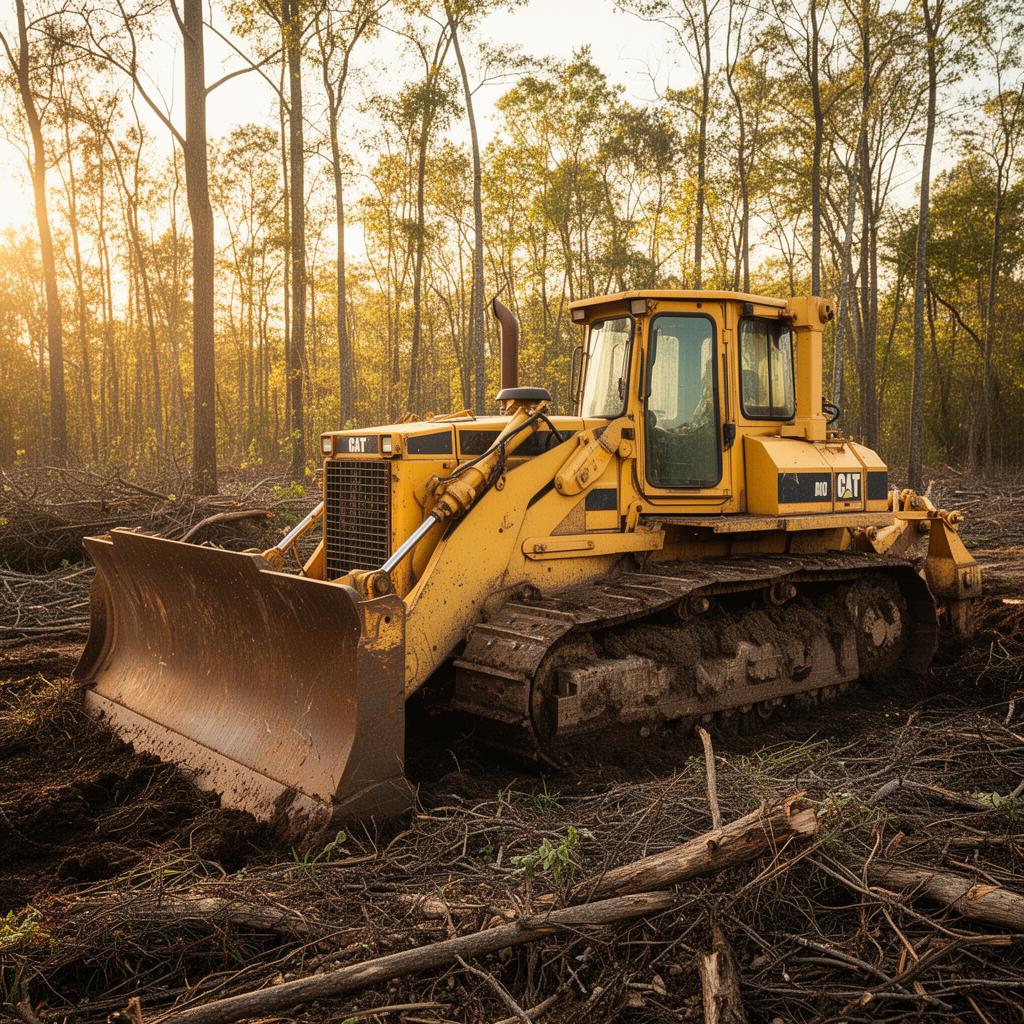
If you are building in Washington, Chocowinity, Beaufort County, or somewhere close by, the first problem is usually the same.
The lot is covered in junk pines, briars, vines, wet spots, stumps, and timber. The builder is waiting. The driveway is not ready. The site drains poorly.
That is where professional land clearing services come in.
This guide explains what happens from the first property walk to a rough-cleared, build-ready site. No fluff. No fake stock photos. Written by the crew, not an SEO bot.
What Land Clearing Means for a Building Site
Land clearing is more than cutting down trees.
A proper land clearing for building site project may include:
- Removing trees, brush, and undergrowth
- Pulling stumps and major roots
- Clearing the house or commercial building envelope
- Opening a driveway and utility routes
- Installing driveway culverts
- Cutting ditches or swales for drainage
- Moving or handling cleared debris
- Rough grading the ground
- Leaving the site ready for the builder, surveyor, or grading crew
The finish you need depends on the next step.
A pasture reclamation job may only need brush and small trees mulched. A house site needs stumps out of the foundation area. A commercial project may need phased clearing, access roads, drainage work, and hundreds of acres handled in sections.
Same dirty work. Different plan.
The Problem: Clearing a Lot the Wrong Way
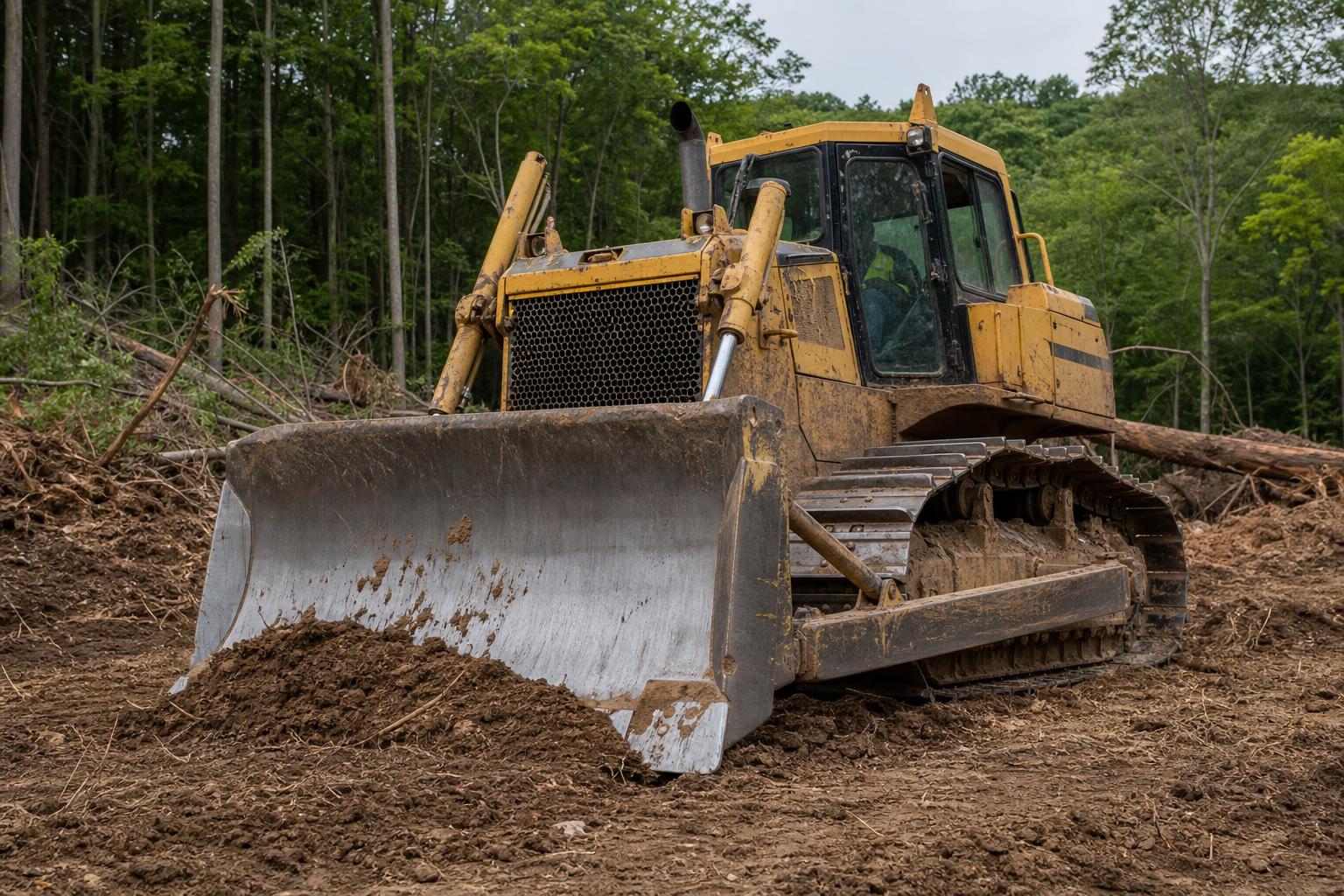
From the seat of the machine, the biggest problems usually come from poor planning.
Common customer headaches
- Contractors who give a quote but never show up
- Crews that stop answering after the first conversation
- A lot cleared too tightly around the slab
- Stumps left where footings or utilities need to go
- Heavy iron tearing up trees or areas you wanted to save
- No plan for debris, burn piles, or haul-off
- Water running across the driveway after the first hard rain
- A low price that turns into extra charges for every stump and load
The fix is simple.
Walk the property first. Mark what stays. Identify access. Match the machine to the ground. Put the scope in writing.
At East Side Dirty Work, you talk straight to the person doing the work. No call center. No middleman. No mystery.
Types of Land Clearing Services
Forestry Mulching
Forestry mulching uses a skid steer or other carrier with a mulching head to grind brush, vines, junk pines, and smaller trees into chips on-site.
It is a good fit for:
- Pastures and fields
- Trail and shooting-lane clearing
- Fence lines and property boundaries
- Thick brush around a homesite
- Areas where you want to limit soil disturbance
- Non-building areas where full stump extraction is not required
The mulch stays on the ground. No burn pile. Less hauling.
But forestry mulching does not automatically mean the lot is ready for a foundation. Stumps and root balls may remain below the mulch layer. The house pad, driveway, and utility routes may still need excavation and grading.
Read more about forestry mulching services.
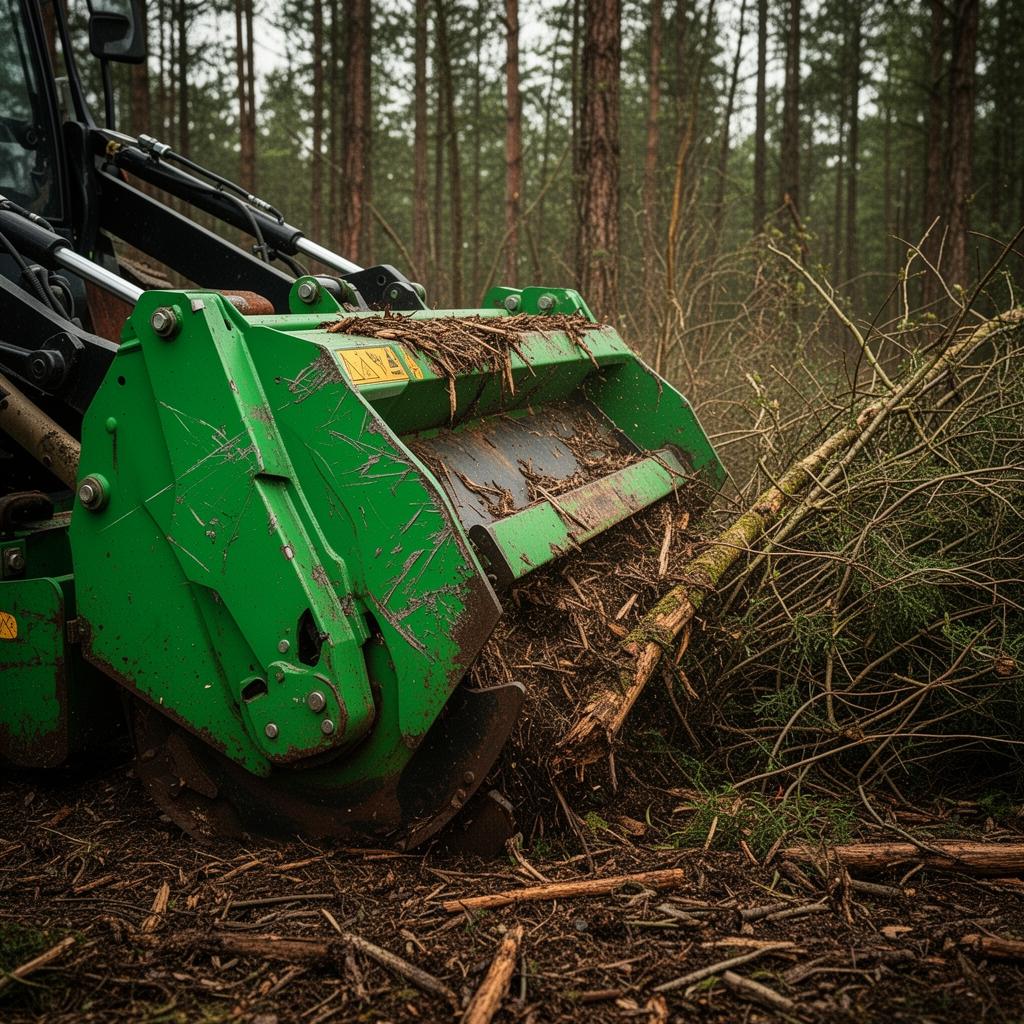
Dozing and Traditional Clearing
A dozer is built to move volume.
It can push timber, brush, soil, and debris across open ground. It is useful for:
- Large open areas
- Rough grading
- Pad preparation
- Building envelope clearing
- Access roads
- Pasture conversion
- Ditch and swale shaping
A dozer is not always the right answer in tight woods or near trees you want to keep. That is where equipment choice matters.
Excavator Work
An excavator gives us reach and control.
An excavator with a thumb can:
- Grab and stack timber
- Pull stumps
- Remove root balls
- Dig around structures or boundaries
- Cut ditches
- Excavate for culverts
- Place pipe and backfill the crossing
For a building site, stump removal is one of the most important parts of the job. Leaving hidden stumps in the foundation area can create trouble for the builder later.

Skid Steer Work
Skid steers are useful in tight areas.
With the right attachment, a skid steer can:
- Mulch brush
- Clean up edges
- Move smaller debris
- Prepare access routes
- Work around saved trees
- Finish areas a larger machine cannot reach
The right crew does not bring the biggest iron just because it is available. The machine should fit the terrain, access, tree density, and desired finish.
Culvert Installation and Ditch Construction
A driveway culvert needs more than a pipe dropped in a ditch.
The work may include:
- Digging the crossing.
- Preparing the pipe bed.
- Setting the correct pipe size and slope.
- Connecting the roadside ditch.
- Backfilling in lifts.
- Covering and shaping the driveway.
- Checking water flow after installation.
Ditches and swales help move water away from the building area, driveway, and low sections of the property. Poor drainage can damage a driveway and leave the building pad wet.
If the crossing involves a stream, wetland, or regulated coastal area, additional approvals may apply. Check with the appropriate county, state, or federal agency before work begins.
How We Run a Building Site Prep Job
Step 1: Walk the Property
We look at:
- Property boundaries
- Existing survey stakes
- Building footprint
- Driveway location
- Utility routes
- Wet areas and low ground
- Trees to save
- Equipment access
- Places for debris or mulch
Bring your builder’s site plan if you have one. If you do not, we can still talk through the clearing scope and identify what needs to be confirmed.
Step 2: Set the Clearing Limits
Do not clear only the exact slab line.
The foundation crew needs working room. East Side Dirty Work’s building lot clearing guidance typically allows a working buffer around the building envelope, based on the builder’s needs and site conditions.
Mark:
- What goes
- What stays
- Where the house or building will sit
- Driveway and turnaround
- Septic or utility areas
- Drainage routes
Step 3: Clear the Vegetation
The crew works in stages.
- Mulch brush where practical
- Fell and handle larger trees
- Push or stack debris
- Protect marked keeper trees
- Open access for the next machine
- Keep the work area organized
Step 4: Remove Stumps and Roots
For a build site, stumps in the foundation and driveway areas usually need to come out.
The excavator pulls the stump and root mass. The dozer then pushes and spreads suitable material as the site takes shape.
Stump removal is one of the main differences between simple brush clearing and full building-site preparation.
Step 5: Handle Debris
Debris may be:
- Mulched in place
- Stacked for the owner
- Burned where legally permitted
- Hauled away by a separate arrangement
Ask this question before accepting a quote. Debris handling can change the price quickly.
Step 6: Rough Grade and Hand Off
The final stage is not finish grading for the foundation crew. It is rough preparation.
That can include:
- Knocking down high spots
- Filling stump holes
- Smoothing travel lanes
- Shaping basic drainage
- Preparing driveway access
- Leaving the ground ready for the builder or grading contractor
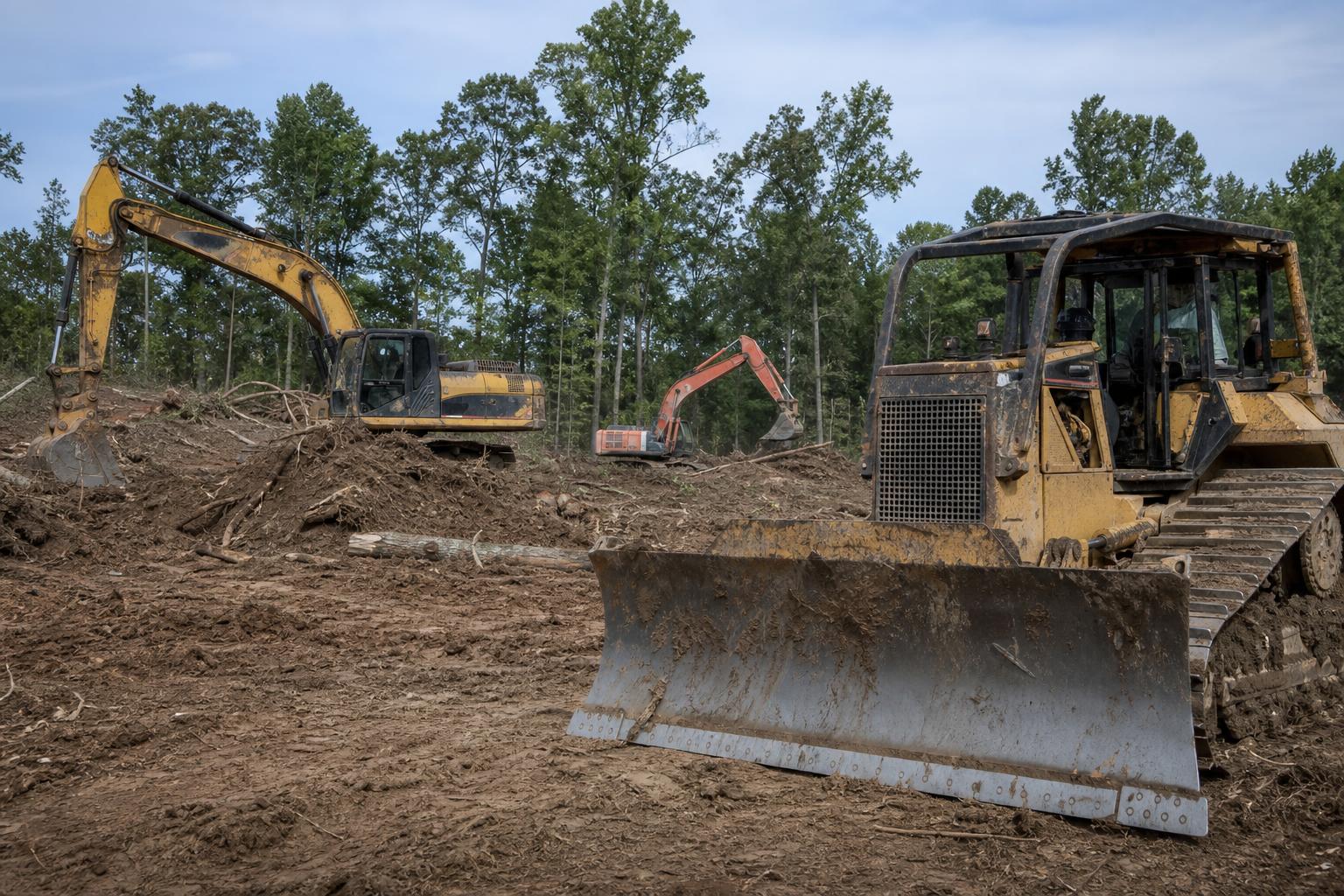
Permitting and Site Prep in North Carolina
Permits depend on the property, jurisdiction, amount of soil disturbance, and whether water or wetlands are involved.
Before digging, call NC 811 for utility locating. Do not assume a rural lot is clear just because there are no visible utility boxes.
For erosion and sediment control information, review the North Carolina Department of Environmental Quality land-quality fee and program information.
You may need to check on:
- County or town grading requirements
- Building-site and driveway approvals
- Erosion and sedimentation control rules
- Wetland or stream impacts
- Culvert approvals
- Coastal Area Management Act requirements
- Homeowners association or subdivision rules
A disturbance area of more than one acre may trigger additional erosion-control requirements. Coastal and water-related work can also involve extra review.
Permitting is the owner’s responsibility unless your project agreement says otherwise. We can help identify questions to ask before the iron arrives.
Land Clearing Cost in Eastern North Carolina
There is no honest one-price-fits-all number. A flat, open half-acre is not the same job as a wet, wooded lot full of large stumps.
East Side Dirty Work’s current ballpark ranges are:
| Project type | Typical ballpark |
|---|---|
| Light woods or open brush | $1,500–$2,500 per acre |
| Medium-density mixed brush and timber | $2,500–$4,500 per acre |
| Heavy timber with full stump removal | $4,500–$8,000+ per acre |
| Standard building lot clearing | $2,500–$6,500 |
| Larger wooded building lot | $5,000–$12,000 |
| Light forestry mulching | $1,800–$2,500 per acre |
| Medium forestry mulching | $2,500–$3,500 per acre |
| Heavy forestry mulching | $3,500–$5,500 per acre |
These are ballparks, not a final quote.
What moves the price
- Tree size and density
- Number and size of stumps
- Slope and wet ground
- Equipment access
- Distance from the road
- Hauling requirements
- Culvert pipe and stone
- Ditch length and depth
- How much ground must be graded
- Trees or structures that need protection
- Whether the work is phased
- Weather and site conditions
The fastest way to get a real number is an on-site estimate. Send a few details through our free estimate form, or call/text 252-514-7525.
How Long Does Land Clearing Take?
A straightforward half-acre to one-acre building site may take roughly one to three machine days once the site is ready and permitted.
Add time for:
- Heavy timber
- Stump extraction
- Haul-off
- Culverts
- Drainage work
- Poor access
- Wet weather
- Multiple structures or utility corridors
Commercial land clearing and large acreage clearing are usually planned in phases. A 50-acre or 200-acre project needs a production schedule, access plan, and clear hand-off points.
Start the conversation early. No-shows and last-minute scheduling can put your builder behind.
Frequently Asked Questions
Do you clear land near me in Washington or Chocowinity, NC?
Yes. East Side Dirty Work serves Washington, Chocowinity, Beaufort County, and surrounding Eastern North Carolina areas. We handle private, agricultural, and commercial work.
Is forestry mulching enough for a new house?
Sometimes for the non-building areas. The house footprint, driveway, and utility routes may still need stump removal, excavation, and grading.
Can you save certain trees?
Yes. Mark the trees you want to keep before work begins. We will plan the machine path around them when site conditions allow.
Do you remove stumps?
Yes. Stump and root removal can be included in the clearing scope. Tell us where the foundation, driveway, septic area, and utilities will go.
Do you install culverts and cut ditches?
Yes. We provide culvert installation and ditch construction as part of site work. Regulatory approvals may be required for certain water crossings.
Do you handle commercial land clearing?
Yes. We can work on anything from a single residential lot to hundreds of acres of agricultural or commercial property.
Are you insured?
Yes. East Side Dirty Work is fully insured.
Get a Real Ballpark for Your Property
You do not need a polished sales pitch. You need someone to look at the ground and tell you what the job involves.
East Side Dirty Work is a locally owned, family-operated heavy equipment business serving Eastern North Carolina. We bring the right iron, explain the variables, and give fast, free, no-pressure on-site estimates.
For land clearing services, land clearing near me, land clearing Washington NC, land clearing Chocowinity NC, or lot and acreage clearing:
- Request a free on-site estimate
- Call or text 252-514-7525
- See our real land clearing work
- Talk through your project
Send the property address, approximate acreage, a few pictures, and what you want to build.
We will talk straight. Then we will give you a real ballpark.