Pasture & Overgrown Field Clearing: Turn Your Land Back Into Working Acreage
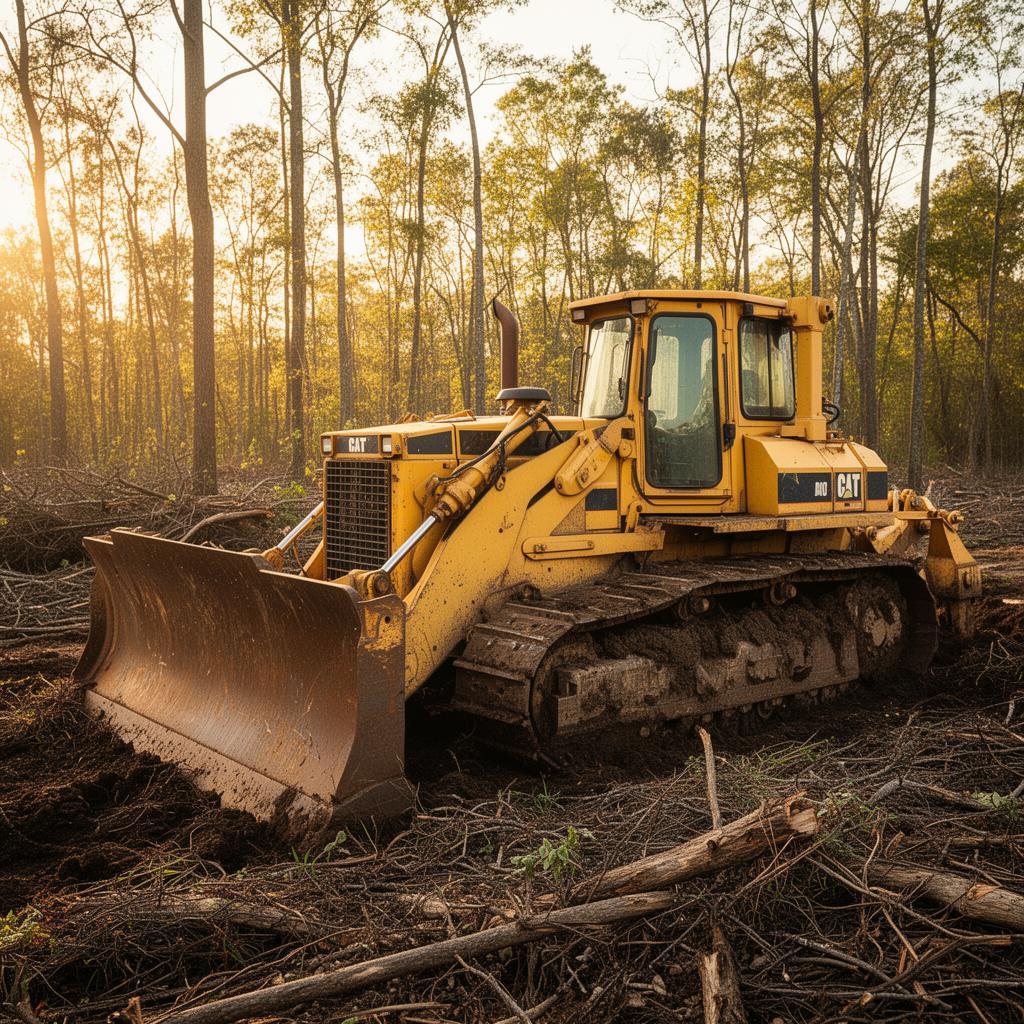
An overgrown pasture does not get better by sitting there.
Junk pines take hold. Briars climb through the fence line. Sweetgum and volunteer saplings fill in the open ground. Before long, the field is not useful for cattle, hay, crops, hunting, or access.
It is just acreage you pay taxes on.
From the seat of the machine, the fix is straightforward. First, figure out what the land needs to become. Then match the right iron to the job.
This is agricultural clearing. Dirty work. No corporate sales pitch. Written by the crew, not an SEO bot.
Why Pastures and Fields Get Overgrown
Eastern North Carolina grows vegetation fast. Leave a field alone for two or three seasons, and the woods start moving back in.
Common problems include:
- Junk pines and volunteer cedar
- Sweetgum, maple, and poplar saplings
- Briars, vines, and thorn bushes
- Tall weeds and waist-high grass
- Fallen trees and storm debris
- Brush growing through old fence lines
- Stumps left from previous timber cutting
- Wet areas that equipment cannot cross
- Ditches and access paths filling with vegetation
Some fields were once used for cattle. Others were hay fields, crop ground, or cleared homesites. The use stopped. The maintenance stopped. Nature took the ground back.
The solution depends on how far it has gone.
Problem: You Need the Land Back, But You Do Not Want More Damage
A farmer usually does not need a bare construction site. You may need:
- Open ground for cattle
- A field ready for hay
- Space for crops
- New pasture
- A clean fence line
- Better equipment access
- A place for farm buildings
- A trail or lane through the property
- Drainage improvements around wet ground
That means the cheapest-looking method is not always the cheapest finished job.
A dozer can move a lot of material quickly. It can also disturb good topsoil, bury stumps, compact the ground, and leave you with more grading than expected.
A forestry mulcher may be the better answer when the goal is to reclaim the field without turning the whole surface into a dirt lot.
We match the iron to the end use.
Equipment We Use for Agricultural Clearing
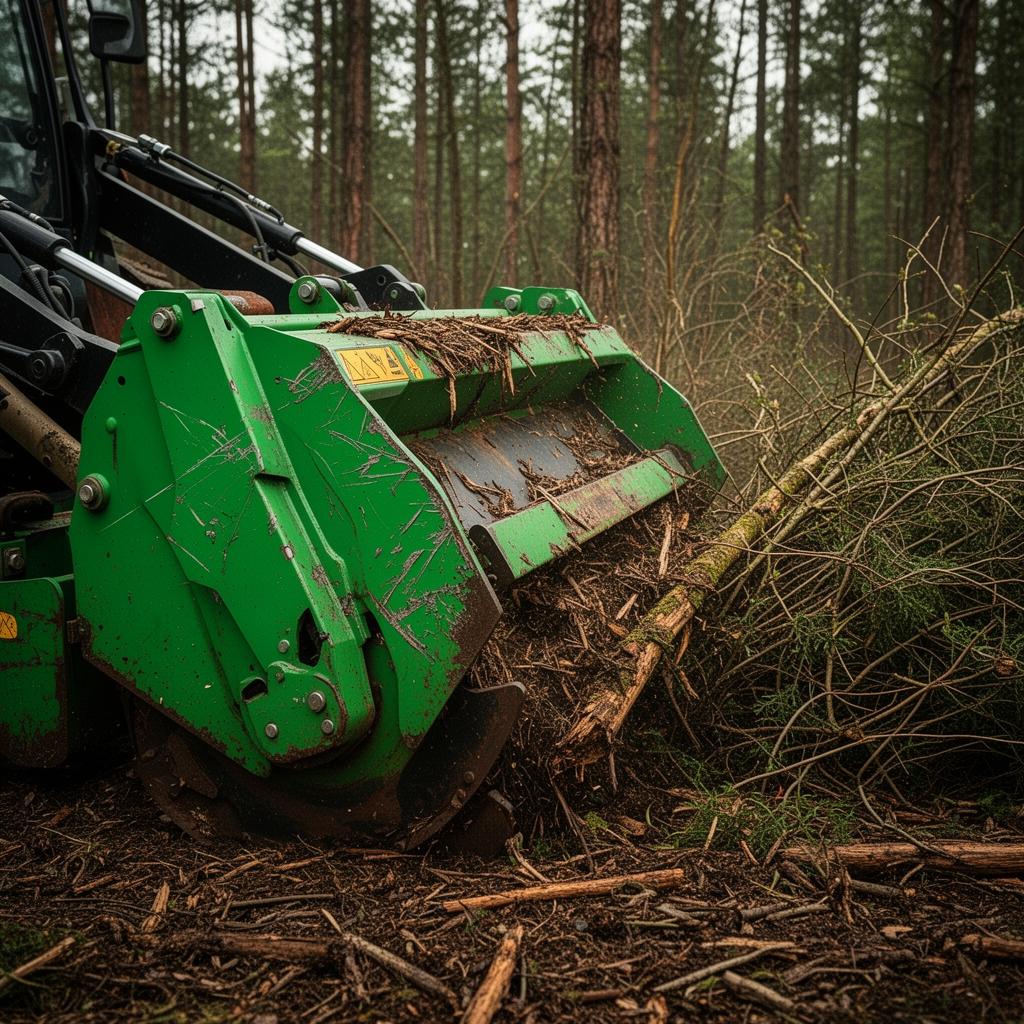
Forestry mulcher
A forestry mulcher is often the right first choice for overgrown pasture and brushy fields.
It grinds briars, vines, small trees, and saplings into mulch on site. No giant burn pile. No endless brush hauling. Less ground disturbance than pushing everything into a pile with a dozer.
It works well for:
- Overgrown pasture reclamation
- Brush removal along fence lines
- Field edges
- Selective clearing
- Access lanes
- Trails and shooting lanes
- Areas where you want to keep mature trees
The mulch layer can help protect the soil from erosion. It also leaves the field cleaner without burying organic material in random piles.
Searches for “forestry mulching near me” usually bring up a lot of pretty photos. The real question is whether the operator understands your ground, your fence, your drainage, and your intended use.
Dozer
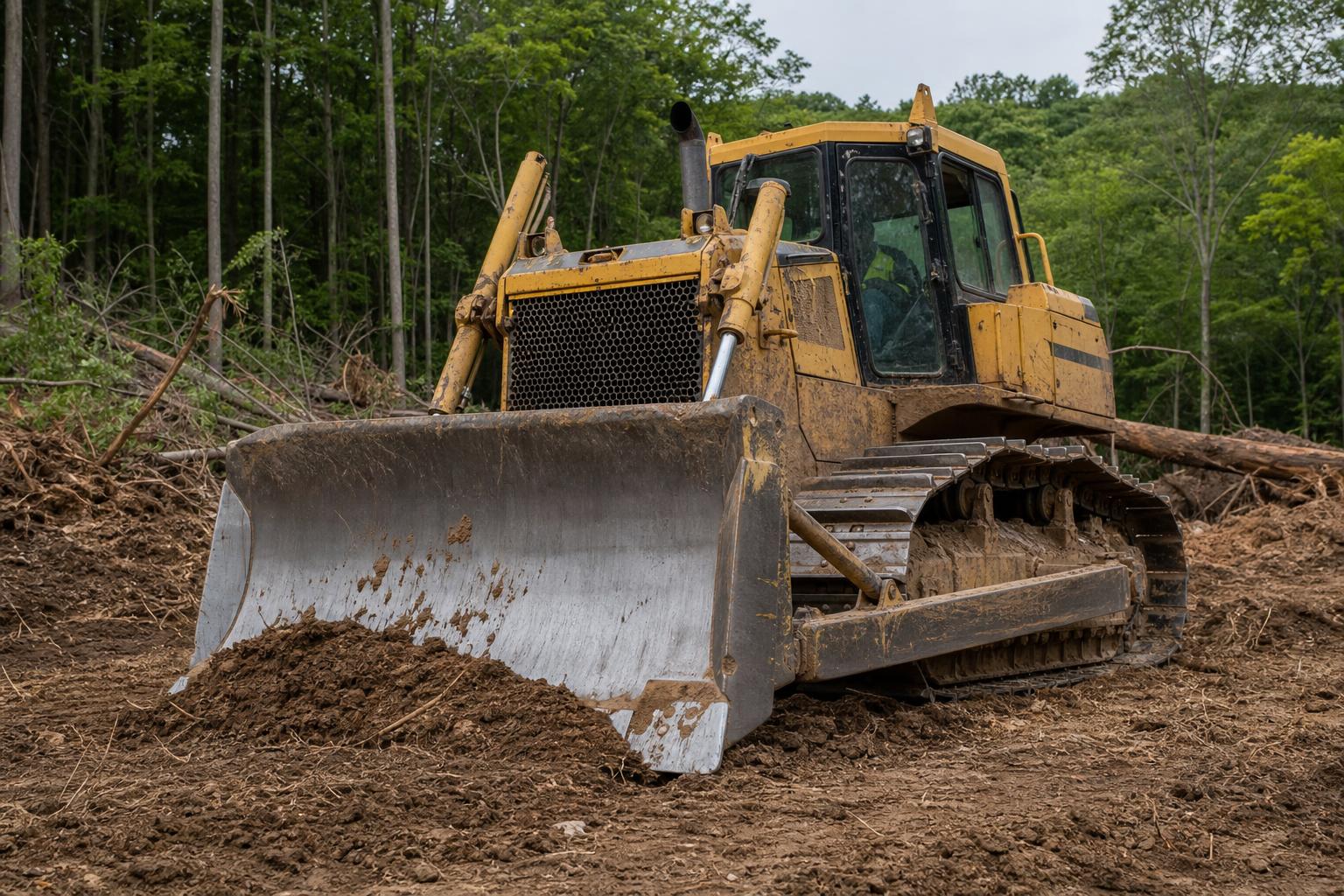
A dozer is the volume machine.
It is useful when you need to push heavy brush, move timber, open large areas, build access, or reshape rough ground. On bigger fields, a dozer can cover ground fast.
We use a dozer when the job calls for:
- Heavy clearing
- Large trees and downed timber
- Open acreage conversion
- Rough grading
- Building farm roads
- Preparing large areas for future production
- Moving debris into organized piles
The catch is soil impact. A dozer is not a magic eraser. Wet conditions, poor access, and careless pushing can rut the field and mix topsoil with subsoil.
Excavator with thumb

The excavator handles the work that needs reach and control.
With a thumb, it can grab logs, pull brush, remove stumps, clean ditches, and work around areas where a dozer cannot maneuver safely.
An excavator is especially useful for:
- Stump and root removal
- Cleaning drainage ditches
- Pulling heavy brush
- Handling logs
- Working beside ponds or fence lines
- Opening wet-area access
- Loading and sorting debris
- Installing or repairing culverts
If the field has old stumps hiding under the grass, an excavator finds them the hard way. Better to deal with them before your mower, hay equipment, or tractor does.
Skid steer
A skid steer is the tight-space machine.
It works around barns, gates, fence corners, wooded edges, and smaller sections of acreage. With a forestry mulcher or brush-cutting attachment, it can clean up areas where larger iron cannot fit.
For a mixed property, the best answer is often a combination:
- Skid steer for tight brush and fence lines.
- Forestry mulcher for saplings and heavy undergrowth.
- Dozer for volume and rough grading.
- Excavator for stumps, ditches, roots, and heavy debris.
That is how you avoid using one machine for every problem.
Clearing Is Not the Same as Grubbing
This is where many quotes get confusing.
Clearing usually means removing standing vegetation, trees, brush, and surface debris.
Grubbing means removing the root balls, stumps, and larger roots below the surface.
Those are different scopes of work.
Forestry mulching can make a field look clean while leaving larger stumps in the ground. That may be fine for pasture, hunting access, or a wooded trail.
It is not the same as preparing ground for:
- Row crops
- Hay equipment
- A barn
- A farm shop
- A driveway
- New fencing
- A building pad
- Regular tillage
If you need smooth, workable ground, say that up front. Stump removal and rough grading need to be included in the plan.
Soil Preparation After Clearing
Do not finish the clearing and forget the ground.
After the vegetation is gone, inspect the field for:
- Stumps and exposed roots
- Ruts and compacted travel lanes
- Low spots
- Erosion channels
- Standing water
- Damaged ditch banks
- Uneven areas that will catch equipment
- Soil exposed by heavy pushing
Depending on the end use, the next steps may include:
- Pulling or grinding remaining stumps.
- Raking roots and heavy debris.
- Rough grading high and low spots.
- Repairing or installing drainage ditches.
- Installing a culvert for equipment access.
- Letting the ground dry before final work.
- Applying lime or soil amendments as recommended.
- Seeding pasture or cover crop.
- Building the fence after equipment access is complete.
Do not install a brand-new fence and then bring a dozer through it. We plan the access first.
Fencing and Access Matter More Than Most Owners Expect
A field may be open on a satellite map and still be difficult to reach.
Before work starts, we look at:
- Gate width
- Gate condition
- Bridge and culvert capacity
- Soft ground
- Power lines
- Neighboring fences
- Property corners
- Septic areas
- Wells
- Ponds and creeks
- Overhead limbs
- Turning room for trailers and equipment
Mark the fence lines you want saved. Mark the trees you want kept. Tell the operator where the livestock, equipment, and buildings are located.
A few minutes walking the property can prevent a lot of damage.
Pasture Clearing Cost Ballparks in Eastern North Carolina
Every field is different. Acreage alone does not set the price.
For planning purposes, typical ballparks may look like this:
- Light brush and small saplings: roughly $1,800–$2,500 per acre
- Medium-density overgrowth: roughly $2,500–$4,500 per acre
- Heavy timber, thick brush, and stump work: roughly $4,500–$8,000+ per acre
- Very heavy clearing with major grading, haul-off, or difficult access: potentially higher
These are not a quote. They are starting numbers.
Your brush removal cost depends on:
- Number and size of trees
- Stump removal requirements
- Slope and soil conditions
- Wet ground
- Distance from the equipment entrance
- Fence and gate access
- Whether debris is mulched, piled, burned where permitted, or hauled away
- Whether the field needs final grading
- Total acreage and whether the job is phased
A one-acre field with dense six-inch sweetgum may cost more than five acres of light briars. That is why an on-site estimate matters.
How Long Does Field Clearing Take?
A light brush job may take a day or two.
A heavier pasture reclamation project may take several days. Large acreage may be completed in phases so you can keep part of the property in use and spread out the cost.
The timeline changes with:
- Acreage
- Vegetation density
- Tree size
- Weather
- Soil moisture
- Equipment access
- Stump removal
- Debris handling
- Drainage and grading needs
We walk the property, discuss the finish you want, and build the work plan around the actual ground.
DIY or Professional Land Clearing?
DIY makes sense for small maintenance work.
You may be able to handle:
- Light mowing
- Small saplings
- Hand trimming
- Basic fence-line maintenance
- Follow-up brush control
Call a professional when the job involves:
- Large trees
- Hidden stumps
- Heavy vines and briars
- Wet ground
- Ditches or culverts
- Steep slopes
- Power lines
- Large acreage
- Tight equipment access
- A deadline for planting, building, or fencing
Renting a machine is not the same as knowing how to run it. One bad move can damage a fence, bury topsoil, hit a buried line, or leave you with a field that needs another contractor to fix.
Real land clearing near me should mean real equipment, real insurance, and a person who will walk the ground with you.
How We Run a Pasture Clearing Job
Walk the property.
We identify what stays, what goes, where equipment enters, and what the finished field needs to do.Choose the equipment.
Dozer, excavator, skid steer, forestry mulcher, or a combination.Clear in stages.
We open access first, then work through the field in an organized pattern.Handle stumps and debris.
Mulch it, move it, stack it, or remove it based on the agreed scope.Finish the ground.
Rake, rough-grade, repair access, and leave the property ready for fencing, seeding, or the next contractor.
Our photos show real jobs. Not stock images. Not fake equipment. You talk straight to the person doing the dirty work.
East Side Dirty Work is locally owned, fully insured, and working across Eastern North Carolina, including Havelock, New Bern, Vanceboro, Pollocksville, Washington, Greenville, Morehead City, and surrounding areas.
If your pasture is turning back into woods, send us a few details for a free on-site estimate. You can also learn more about our land clearing services, forestry mulching, or lot and acreage clearing.
No pressure. Just a real ballpark for your ground.